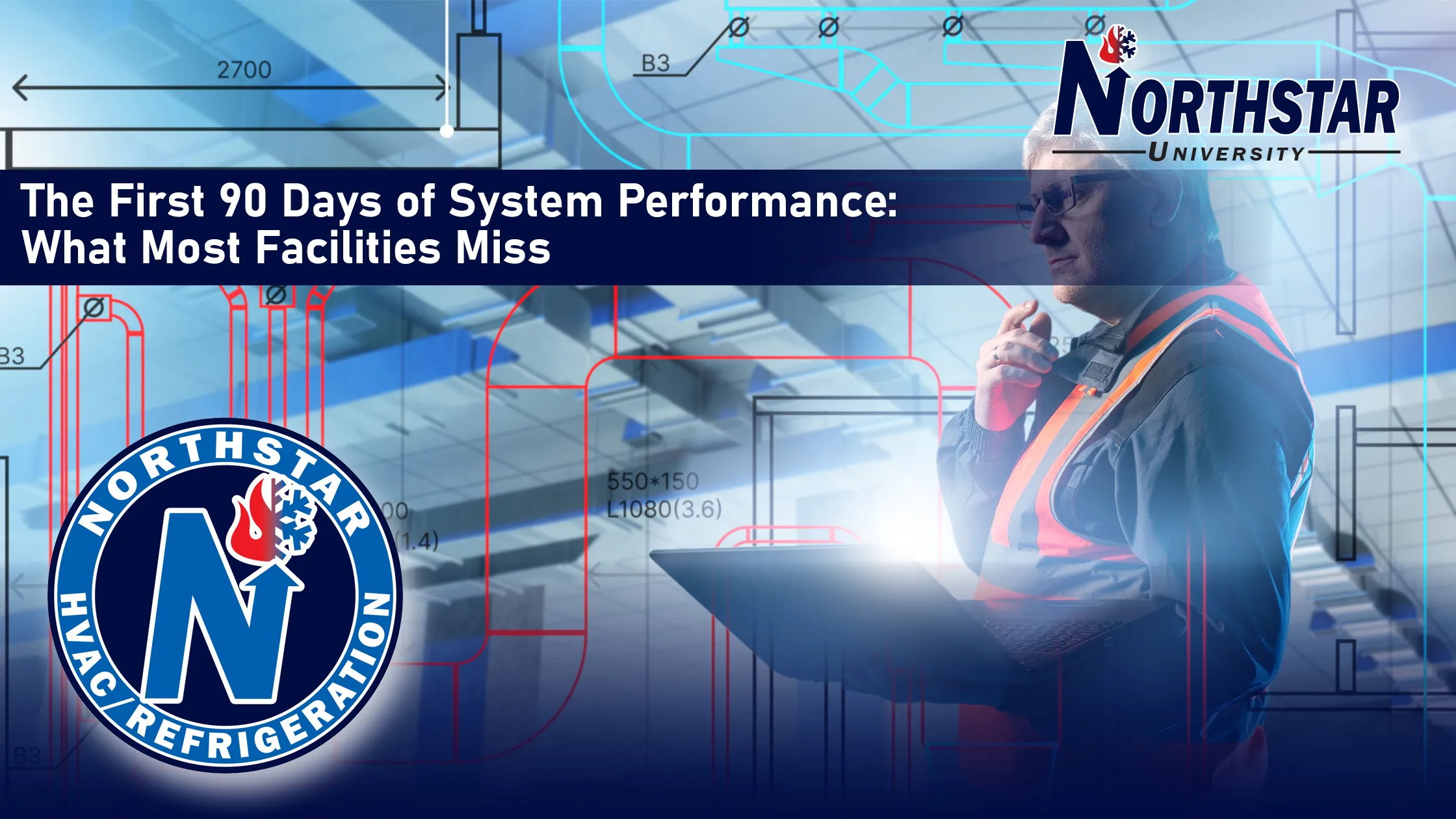
The First 90 Days of System Performance: What Most Facilities Miss
When a new HVAC or refrigeration system is installed, or an existing system transitions into a new season, there's a natural sense of relief.
The project is complete. The system is running. Temperatures look stable.
But in reality, the first 90 days of operation are one of the most critical, and most overlooked, periods in the entire lifecycle of a system.
This is where performance gaps quietly begin.
Small inefficiencies, control issues, and operational misalignments often develop during this window. If they aren't identified early, they can persist for years, impacting energy use, reliability, and system longevity.
Why the First 90 Days Matter
During the initial operating period, systems are:
- Adjusting to real-world load conditions
- Operating under varying occupancy and environmental patterns
- Revealing how well design assumptions match actual performance
- Experiencing early wear-in of mechanical components
It's also the point where the system moves from designed performance to actual performance.
Without proper follow-up, the two rarely match.
What Most Facilities Miss
1. Control Sequence Fine-Tuning
Even well-designed systems often require adjustment once they're running in real conditions.
Common issues include:
- Improper setpoints
- Simultaneous heating and cooling
- Inefficient scheduling
- Incorrect staging of equipment
These problems don't always trigger alarms, but they quietly increase energy consumption and reduce efficiency.
2. Airflow and System Balance
Initial startup doesn't always reflect long-term airflow performance.
Over the first few weeks:
- Filters begin loading
- Dampers shift
- Occupancy patterns change
- Zones reveal imbalance
Without re-evaluation, airflow issues can persist and worsen.
3. Refrigerant Charge and System Stability
After startup, systems can experience:
- Minor refrigerant loss
- Improper superheat or subcooling
- Pressure fluctuations under varying loads
These conditions may not cause immediate failure, but they impact efficiency and long-term system health.
4. Sensor Calibration and Data Accuracy
Sensors drive modern HVAC and refrigeration systems, but they are not always perfectly calibrated at startup.
Drift or misalignment can lead to:
- Incorrect temperature readings
- Faulty control decisions
- Inefficient operation
A system is only as accurate as the data it receives.
5. Equipment Wear-In and Early Mechanical Issues
The first 90 days often reveal:
- Belt stretch and misalignment
- Loose electrical connections
- Vibration issues
- Early component fatigue
Catching these early prevents premature failures later.
6. BAS and Monitoring Gaps
Many facilities don't fully utilize their Building Automation System during early operation.
Missed opportunities include:
- Reviewing trend data
- Identifying abnormal patterns
- Adjusting system performance proactively
This is one of the most powerful tools, and one of the most underused.
7. Documentation and Knowledge Transfer
After installation, critical knowledge can get lost:
- System design intent
- Control strategies
- Maintenance requirements
- Recommended setpoints
Without clear documentation and training, systems are often operated inefficiently.
The Risk of Skipping the First 90 Days
When early performance gaps go unaddressed, facilities often experience:
- Higher energy costs
- Persistent comfort complaints
- Increased maintenance needs
- Reduced equipment lifespan
- More frequent emergency calls
These issues rarely trace back to a single failure, they stem from unoptimized operation from day one.
What Facilities Should Do Instead
A structured post-startup or post-transition strategy should include:
✔ System performance review at 30, 60, and 90 days
✔ Control sequence validation
✔ Airflow and balance checks
✔ Refrigerant and pressure verification
✔ Sensor calibration
✔ BAS trend analysis
✔ Documentation and operator training
This approach bridges the gap between installation and long-term performance.
How Northstar Refrigeration Supports Post-Startup Performance
Northstar helps facilities ensure systems perform as intended, not just on day one, but long after.
Our team provides:
- Post-installation and seasonal performance reviews
- HVAC and refrigeration system optimization
- Control sequence evaluation and adjustments
- Airflow diagnostics and balancing support
- Monitoring and data analysis
- Preventive maintenance aligned with system performance
📞 Call (508) 888-3692
📧 Email sales@northstarhvacr.com to schedule a system performance evaluation.
Learn more about our commercial HVAC services, or contact us to schedule a consultation.
Do you have questions about this topic?
📧 Email sales@northstarhvacr.com to discuss predictive maintenance and monitoring options for your business.