What Makes a Building “Hard” to Heat and Cool?
Two buildings can have similar HVAC equipment, similar square footage, and even similar operating schedules—yet one maintains comfortable temperatures with ease while the other constantly struggles.
Why?
The answer isn't always the HVAC equipment.
A building's construction, layout, occupancy, operations, and even how people use the space can dramatically affect heating and cooling demand. Understanding these factors can help facility managers distinguish between an equipment problem and a building that is simply placing greater demands on its HVAC system.
The Building Envelope Matters
Your HVAC system is constantly working against outdoor conditions.
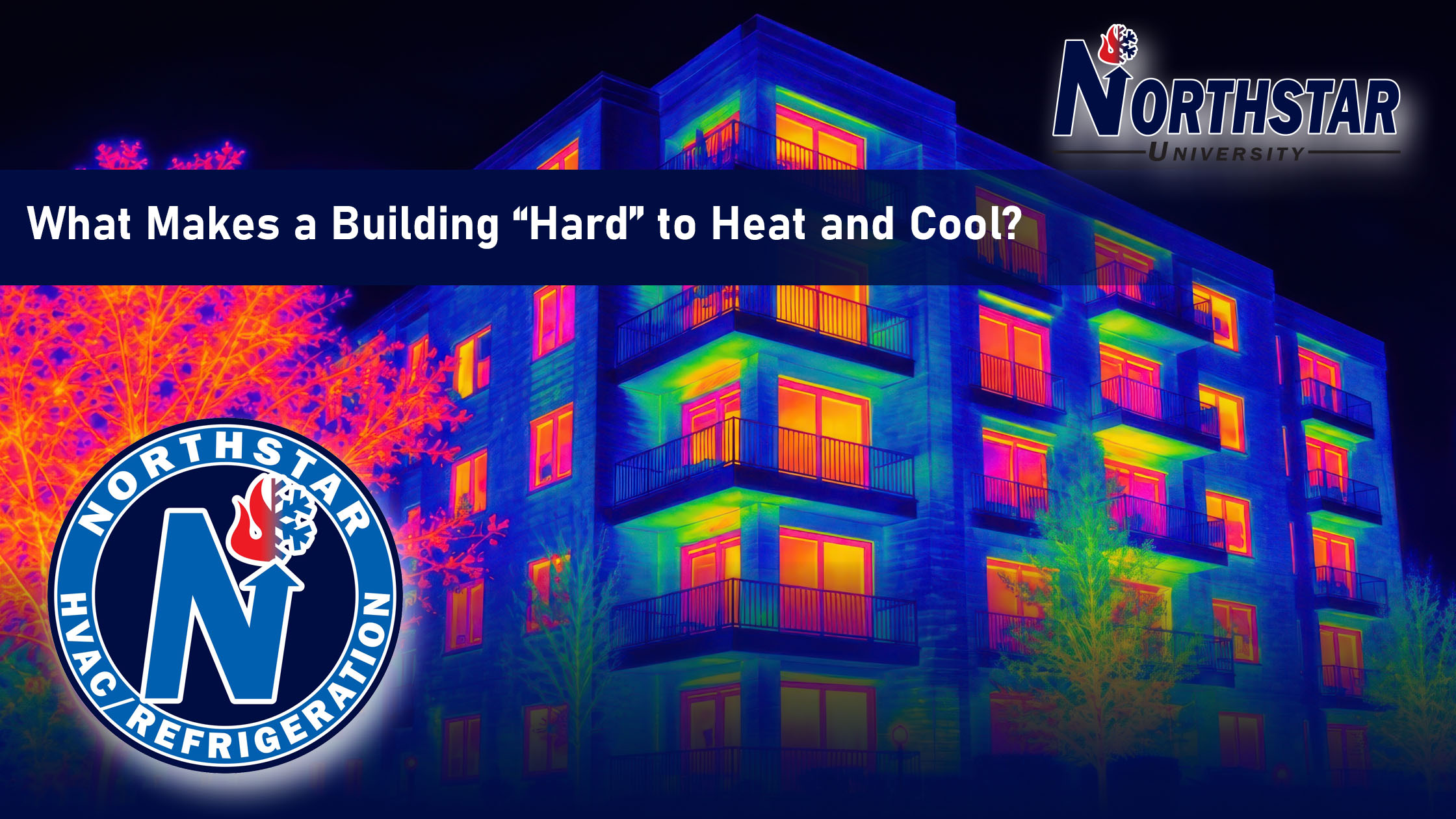
The building envelope—including walls, windows, doors, roofing, and insulation—determines how easily heat moves into or out of the building.
Common issues include:
- Poor or aging insulation
- Air leaks around windows and doors
- Frequently opened exterior doors
- Large glass exposures
- Aging roofing systems
During summer, these conditions allow additional heat into the building. During winter, they allow valuable conditioned air to escape.
The HVAC system has to make up the difference.
Sun Exposure Can Create Very Different Loads
Not every side of a building experiences the same conditions.
Spaces with significant afternoon sun exposure may require substantially more cooling than shaded areas of the same building.
This can create situations where one part of a facility is comfortable while another consistently feels too warm.
Window orientation, shading, roof exposure, and surrounding buildings can all influence how much heat a space gains throughout the day.
Occupancy Changes the Equation
People generate heat.
So do computers, lighting, machinery, kitchen equipment, and other electrical loads.
A conference room designed for occasional use may become difficult to cool when it's filled with people. An office area that has added employees and equipment over the years may now have a very different cooling load than when the HVAC system was originally designed.
Buildings evolve, but HVAC systems don't automatically adapt to those changes.
Building Operations Can Work Against the HVAC System
Everyday operations can significantly influence HVAC performance.
Examples include:
- Loading dock doors remaining open
- Frequent exterior door traffic
- Exhaust fans removing conditioned air
- Production equipment generating heat
- Changes in operating hours
- Spaces being used differently than originally intended
None of these necessarily indicate a problem with the HVAC equipment.
Instead, they change the conditions the system is being asked to manage.
Airflow and Building Pressure Matter
Heating and cooling a building isn't only about producing hot or cold air. That conditioned air also needs to reach the right places.
Poor airflow can lead to:
- Hot and cold spots
- Rooms that struggle to reach setpoint
- Excessive equipment runtime
- Comfort complaints in specific areas
Building pressure can create similar challenges. If a facility exhausts more air than it brings in, outside air may be pulled through doors, cracks, and other openings.
During a New England winter or a hot, humid summer, conditioning that additional outside air can create a significant load.
Controls and Zoning Can Create Challenges
Sometimes a building is difficult to heat or cool because the HVAC system isn't responding appropriately to what's actually happening inside it.
Potential issues include:
- Poorly located temperature sensors
- Zones serving spaces with very different needs
- Outdated occupancy schedules
- Improper setpoints
- Equipment that isn't properly sequenced
A temperature sensor located in a cool interior hallway, for example, may not accurately represent conditions in a perimeter office receiving direct afternoon sunlight.
The equipment may be operating correctly based on the information it receives—the information just isn't telling the whole story.
The Building May Have Changed Since the System Was Designed
This is an important consideration in older commercial facilities.
Over time, buildings are renovated and repurposed.
Walls move. Offices become conference rooms. Warehouses become production areas. New equipment is installed. Occupancy increases.
Each change can affect heating and cooling loads.
If the HVAC system was designed around conditions that no longer exist, it may struggle even when the equipment itself is functioning properly.
Bigger Equipment Isn't Always the Answer
When a building struggles to maintain temperature, it can be tempting to assume more heating or cooling capacity will solve the problem.
But installing larger equipment without identifying the underlying cause can create new challenges.
Before increasing capacity, facilities should evaluate the entire picture:
- Has building usage changed?
- Is airflow properly balanced?
- Are controls operating correctly?
- Is outside air entering the building unexpectedly?
- Has the building envelope deteriorated?
- Is the existing equipment actually delivering its designed capacity?
Understanding the root cause helps ensure the solution addresses the real problem.
Look at the Building as a System
A comfortable, efficient building depends on more than HVAC equipment alone.
The building envelope, airflow, controls, occupancy, operating practices, and mechanical systems all interact with one another.
When performance problems arise, looking at the entire facility can reveal issues that would be missed by focusing on the HVAC unit alone.
Sometimes the question isn't:
“What's wrong with the HVAC system?”
It's:
“What's making the HVAC system work so hard?”
In Summary
Some buildings are naturally more challenging to heat and cool than others. Age, construction, occupancy, operations, airflow, controls, and changes in how the building is used can all influence HVAC performance.
Understanding those factors can help facility managers make better decisions, avoid unnecessary equipment changes, and identify opportunities to improve comfort and efficiency.
At Northstar Refrigeration, we look beyond individual pieces of equipment to understand how HVAC systems are performing within the facility as a whole. When a building consistently struggles with comfort or system performance, identifying the why is the first step toward finding the right solution.
Do you have questions about this topic?
📧 Email sales@northstarhvacr.com to discuss predictive maintenance and monitoring options for your business.