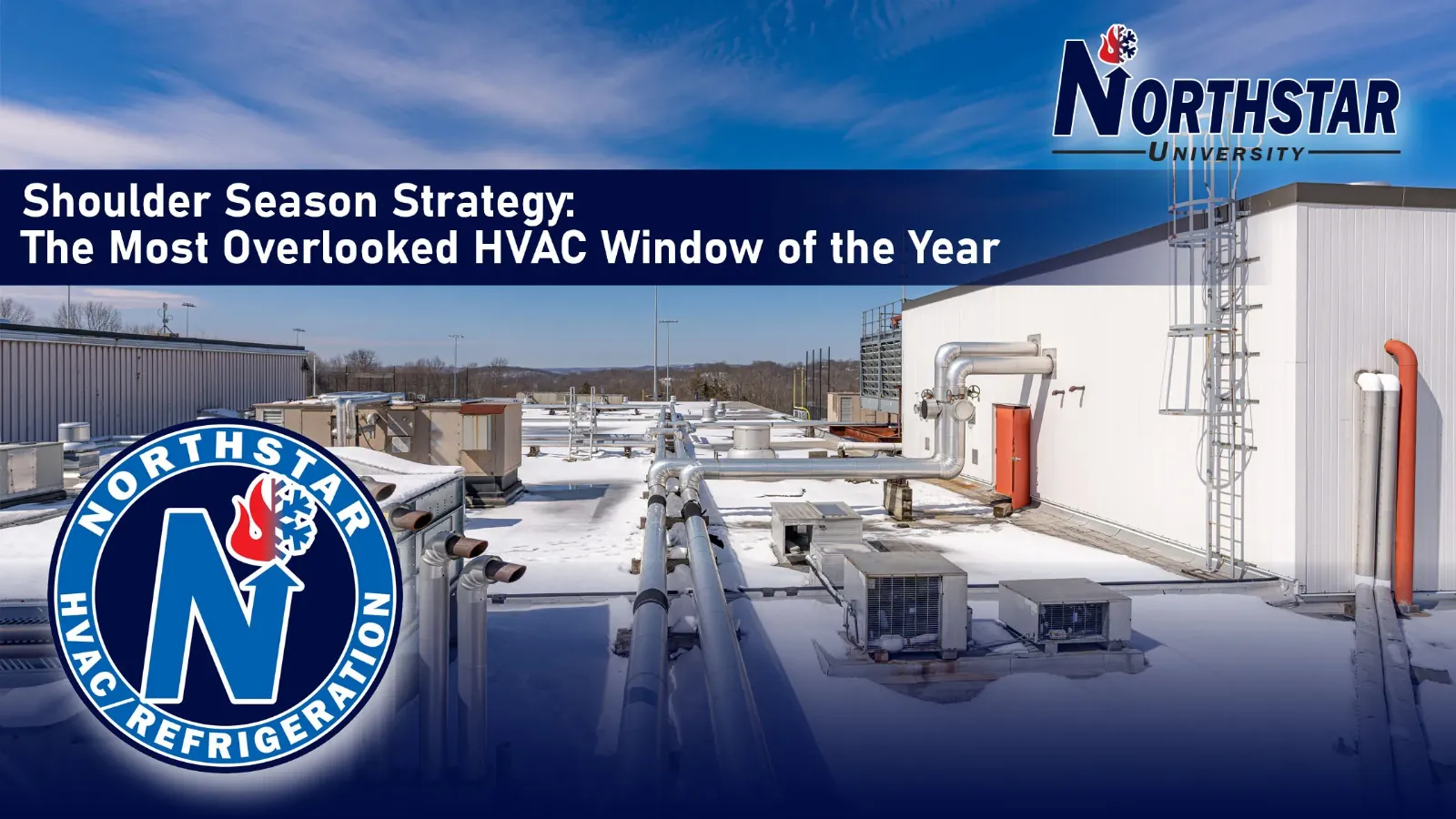
Shoulder Season Strategy: The Most Overlooked HVAC Window of the Year
Between the intensity of winter heating and the peak demandof summer cooling lies a short but powerful opportunity: shoulder season.
In New England, this window, typically early spring and fall, is often treated as a transition period. Heating demand drops. Cooling hasn't yet surged. Complaints are minimal. And because the building "feels fine," HVAC systems are largely left alone.
That's a mistake.
Shoulder season is the most overlooked strategic window of the year, and the most valuable time to reduce risk, improve efficiency, and prepare for peak load.
What Is Shoulder Season, and Why It Matters
Shoulder season refers to the period between peak heating and cooling demands when outdoor temperatures are moderate and system loads are lighter.
This reduced demand creates:
- Lower system stress
- More service availability
- Fewer emergency interruptions
- Better access to rooftops and mechanical spaces
- Ideal conditions for testing and calibration
In short: it's your best opportunity to work on the system without the system working against you.
Why Facilities Overlook It
There's a natural human tendency to act when somethingbreaks.
But shoulder season presents no urgency:
- Occupants are comfortable
- Energy use is stable
- Equipment isn't visibly struggling
Without complaints, maintenance often gets deferred, until peak season exposes hidden weaknesses.
1. The Best Time for Preventive Maintenance
Shoulder season allows for:
✔ Full equipment inspections
✔ Coil cleaning
✔ Belt and bearing replacement
✔ Sensor recalibration
✔ Economizer testing
✔ Refrigerant level verification
Completing these tasks before demand spikes reduces the likelihood of emergency calls in July or January.
2. Economizer & Ventilation Optimization
Mild outdoor air is ideal for economizer operation, but only if dampers, actuators, and sensors are functioning properly.
Shoulder season is the perfect time to:
- Test economizer sequences
- Confirm damper movement
- Calibrate outdoor air sensors
- Evaluate ventilation rates
Faulty economizers can quietly waste energy for months.
3. Static Pressure and Airflow Evaluation
Lower load periods make it easier to evaluate:
- Air balance issues
- High static pressure
- Filter performance
- Duct obstructions
Addressing airflow now prevents system strain during peakheating and cooling cycles.
4. Refrigeration Performance Tuning
For facilities operating year-round refrigeration, ice rinks, cold storage, food processing, shoulder season offers an opportunity to:
- Review head pressure control strategies
- Evaluate defrost efficiency
- Inspect evaporator performance
- Adjust control logic
Mild conditions reveal inefficiencies that extreme weather can mask.
5. Capital Planning and System Assessments
Shoulder season is ideal for:
- Equipment life-cycle evaluations
- Replacement planning
- Energy efficiency upgrades
- Refrigerant transition strategy discussions
Upgrades performed during moderate weather minimize operational disruption.
6. Spare Parts Strategy Review
This is also the best time to:
- Audit spare parts inventory
- Identify long-lead components
- Order seasonal high-risk items
- Establish proactive sourcing plans
Waiting until peak season reduces options and increases cost.
7. BAS and Controls Optimization
Shoulder season allows facilities to:
- Review trend data
- Identify performance anomalies
- Adjust setpoints
- Improve scheduling logic
Small adjustments now prevent large inefficiencies later.
The Cost of Ignoring Shoulder Season
Facilities that skip shoulder season strategy often experience:
- Higher summer emergency call volume
- Increased winter system failures
- Shortened equipment lifespan
- Energy inefficiencies that persist all year
- Missed upgrade windows
The systems didn't fail because of peak demand.
They failed because preparation didn't happen before peak demand.
How Northstar Refrigeration Helps You Leverage ShoulderSeason
Northstar works with commercial and industrial facilities touse shoulder season strategically:
- Preventive maintenance scheduling
- System performance reviews
- Economizer testing and airflow diagnostics
- Refrigeration efficiency assessments
- Spare parts planning
- Capital planning guidance
- 24/7 emergency support year-round
📞 Call (508) 888-3692
📧 Email sales@northstarhvacr.com to schedule your shoulder season assessment.
Learn more about our commercial HVAC services, or contact us to schedule a consultation.
Do you have questions about this topic?
📧 Email sales@northstarhvacr.com to discuss predictive maintenance and monitoring options for your business.