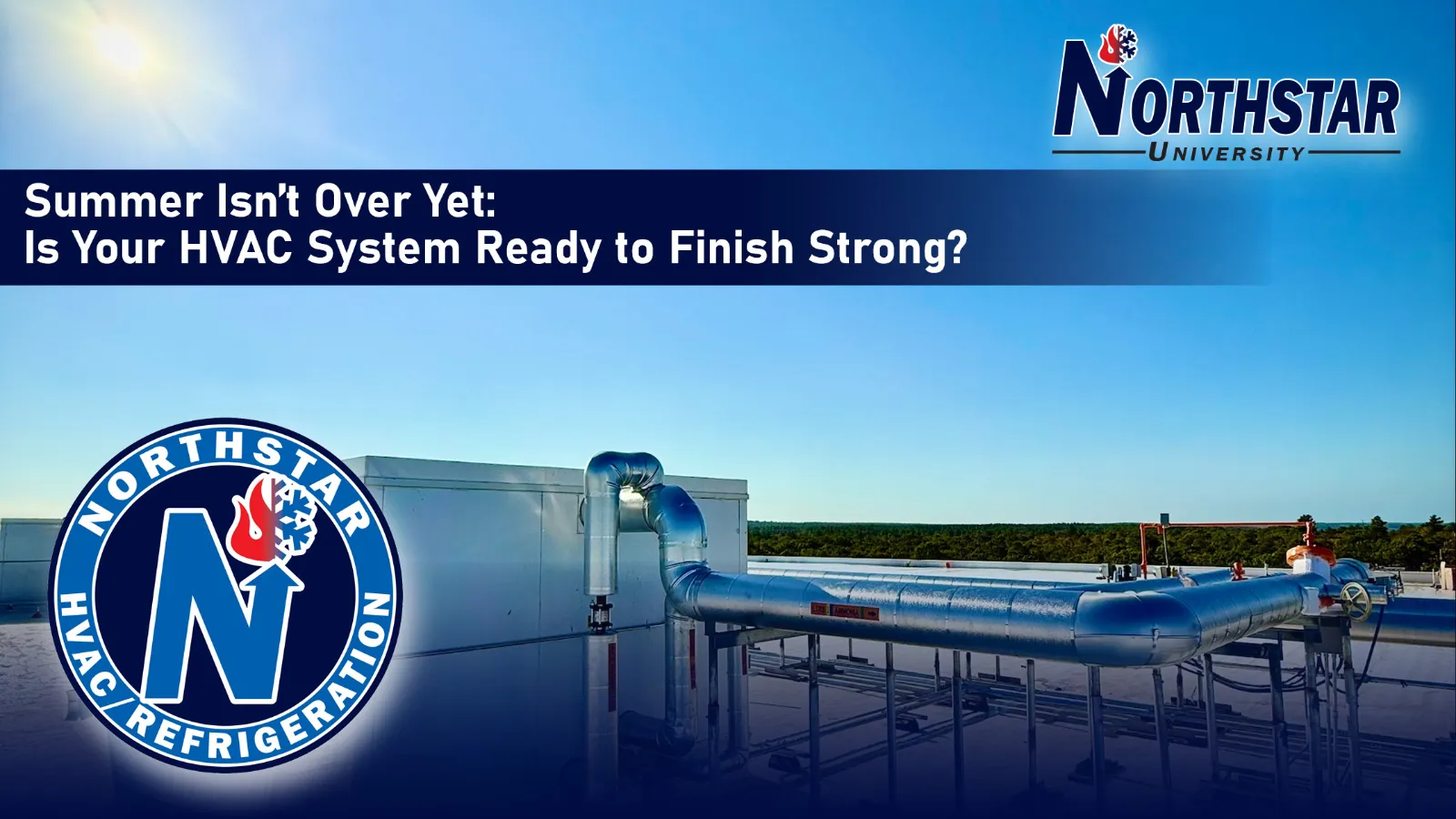
Summer Isn’t Over Yet: Is Your HVAC System Ready to Finish Strong?
Labor Day may be approaching, but that doesn’t mean cooling season is over.
Late August and September can still bring plenty of warm weather, and by this point in the season, commercial HVAC systems have already spent months handling high temperatures, humidity, and increased cooling demand.
That makes late summer an important time to pay attention to system performance.
Your HVAC equipment doesn't know the calendar is changing. If anything, the final weeks of summer can reveal problems that have been developing throughout the season.
Months of Heavy Operation Add Up
Commercial cooling equipment can accumulate significant runtime over the course of a summer.
Compressors, fans, motors, belts, electrical components, and controls have all been working to maintain building conditions through some of the year's highest loads.
Even equipment that performed well in June may begin showing signs of wear by late August.
That doesn't necessarily mean something is failing. It does mean facility teams should pay attention to changes in how the system is operating.
Watch for Changes in Performance
One of the most valuable things facility managers can do at this point in the season is compare current performance with what they've seen earlier in the summer.
Watch for:
- Longer equipment runtimes
- Difficulty reaching setpoints
- Uneven temperatures
- Reduced airflow
- Unusual noises or vibration
- Increasing energy consumption
- More frequent alarms
- Occupant comfort complaints
Small changes can provide early warning that equipment needs attention.
Don't Ignore a System That's “Still Working”
HVAC problems aren't always obvious.
Equipment may continue cooling the building while operating inefficiently or under unnecessary strain.
For example, dirty coils, restricted airflow, deteriorating belts, control issues, or electrical problems may not immediately shut a system down.
Instead, the equipment may simply work harder to produce the same result.
If a system suddenly needs more runtime to maintain the same conditions, it's worth understanding why.
Filters and Coils Have Had a Long Summer Too
Some of the simplest maintenance items can have a significant effect on late-season performance.
Filters accumulate dirt and debris over time, while outdoor condenser coils can collect pollen, dust, leaves, and other contaminants.
Restricted airflow or reduced heat transfer forces equipment to work harder.
Checking filters and coils toward the end of the cooling season can help ensure equipment isn't carrying unnecessary additional load through the final hot days of the year.
Late-Summer Humidity Still Matters
Temperature isn't the only challenge.
Warm, humid conditions can continue well into September, requiring HVAC systems to manage both sensible and latent loads.
If humidity levels begin increasing indoors, it could indicate changes in:
- Equipment operation
- Airflow
- Controls
- Outside air management
- Cooling capacity
Indoor humidity problems shouldn't automatically be dismissed simply because the hottest part of summer has passed.
Use This Summer's Performance as a Report Card
Late summer is also a great time to evaluate how your system performed overall.
Ask:
- Did certain units struggle during extreme heat?
- Were there recurring comfort complaints?
- Did any equipment require repeated repairs?
- Were there areas that consistently couldn't maintain setpoint?
- Did energy consumption increase unexpectedly?
- Were any temporary repairs made that still need a permanent solution?
These observations can help identify priorities for the upcoming shoulder season.
Instead of forgetting about cooling equipment once temperatures drop, use what you learned this summer to plan maintenance, repairs, or future capital improvements.
Don't Put Off Known Issues Until Next Summer
It's easy to think:
“We'll deal with that before next summer.”
But several months can pass quickly.
Once cooling demand begins to decrease, facilities have an opportunity to address problems without the same urgency that comes with a 90-degree day.
That may mean:
- Completing deferred repairs
- Investigating recurring performance issues
- Replacing worn components
- Reviewing controls
- Evaluating aging equipment
- Planning larger upgrades or replacements
Addressing known issues during lower-demand periods gives facility managers more time to evaluate options and budget appropriately.
Finish Strong and Plan Ahead
Late summer is an interesting point in the HVAC calendar.
Cooling season isn't over, but heating season isn't far away.
That makes it a valuable time to do two things simultaneously:
Keep cooling equipment reliable through the remaining warm weather while beginning to plan for the season ahead.
The facilities that manage this transition proactively are less likely to carry unresolved problems from one season into the next.
In Summary
Summer may be winding down, but your HVAC system still has work to do.
After months of heavy operation, now is the time to watch for performance changes, address developing issues, and take note of what this summer revealed about your equipment.
Your system doesn't know Labor Day is approaching.
Until cooling demand actually decreases, it still needs to be ready to perform.
At Northstar Refrigeration, we help commercial and industrial facilities maintain reliable HVAC performance throughout the entire cooling season while preparing equipment for changing seasonal demands.
📞 (508) 888-3692
📧 sales@northstarhvacr.com
Do you have questions about this topic?
📧 Email sales@northstarhvacr.com to discuss predictive maintenance and monitoring options for your business.