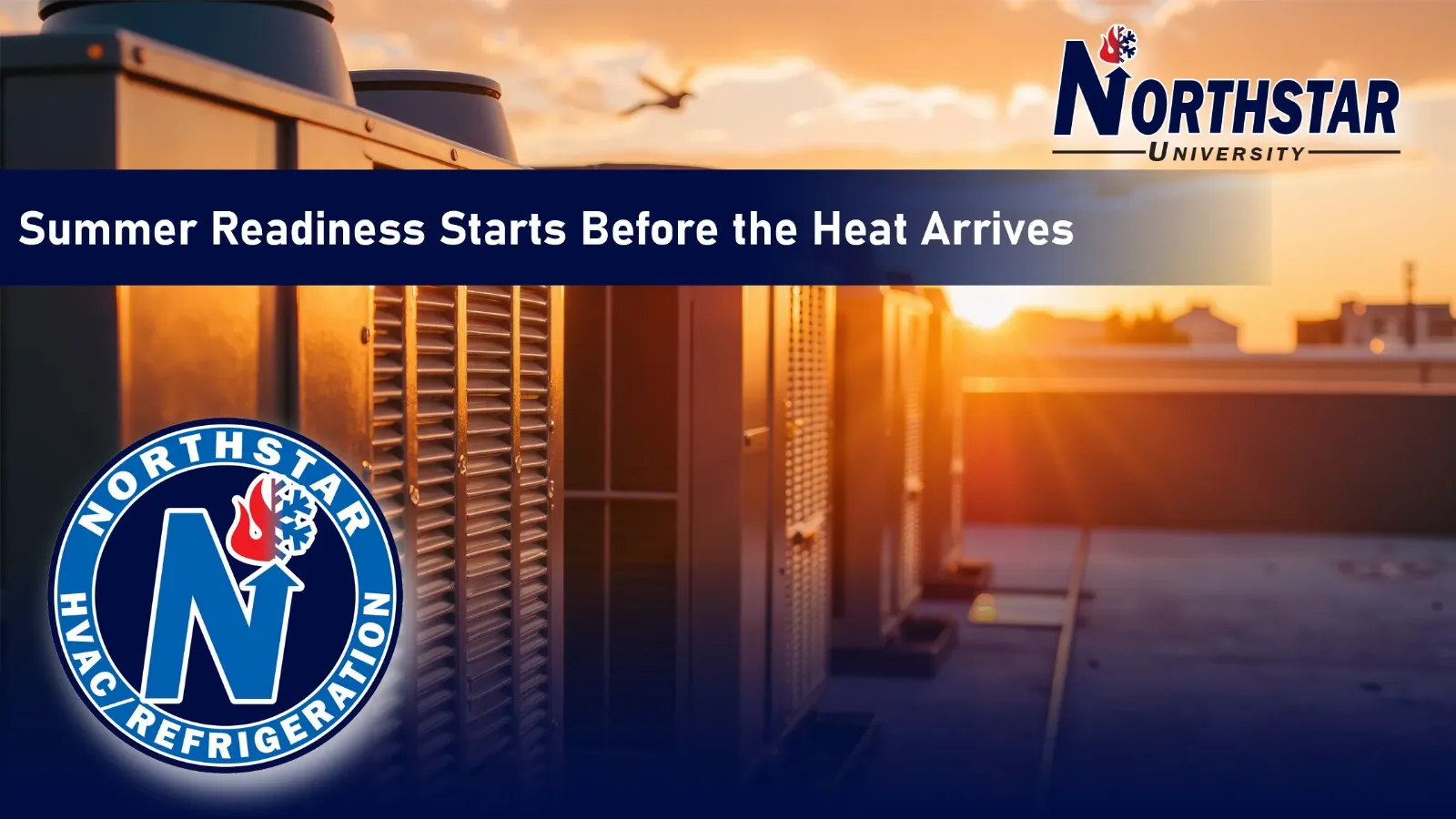
Summer Readiness Starts Before the Heat Arrives
When the first major heat wave arrives, it’salready too late to prepare your HVAC system.
By the time temperatures spike, commercial and industrial HVAC systems are pushed into peak demand mode, and small issues that went unnoticed during milder weather can quickly turn into major operational problems.
That’s why summer readiness doesn’t start inJune or July.
It starts before the heat arrives.
For facility owners and operations teams, spring and shoulder season are the most important windows for reducing risk, improving efficiency, and preparing HVAC systems for the demands of summer.
Why EarlyPreparation Matters
Cooling systems experience some of the highest stress levels of the year during summer operation.
As outdoor temperatures rise:
- Refrigeration pressures increase
- Compressors work harder
- Runtime extends significantly
- Electrical demand spikes
Even minor inefficiencies become amplified under these conditions.
A system that appears to run “fine” in mild weather may struggle once sustained heat arrives.
1. Preventive Maintenance Before Peak Load
The best time to inspect and service equipment is before it’s operating at full capacity.
Key preseason maintenance items include:
✔ Cleaning condenser and evaporator coils
✔ Replacing or inspecting filters
✔ Verifying refrigerant charge
✔ Inspecting belts, motors, and bearings
✔ Tightening electrical connections
✔ Testing safety controls and alarms
Addressing these issues early helps reduce emergency breakdowns during peak season.
2. Airflow and Ventilation Checks
Summer performance depends heavily on proper airflow.
Restricted airflow can cause:
- Reduced cooling capacity
- Increased energy use
- Higher static pressure
- Compressor strain
Facilities should evaluate:
- Filter loading
- Supply and return airflow
- Economizer operation
- Outdoor air intake conditions
Small airflow restrictions can significantly impact system performance during hot weather.
3. Refrigerant and Pressure Verification
Improper refrigerant charge often goes unnoticed until outdoor temperatures rise.
Low refrigerant levels can lead to:
- Poor cooling performance
- Excessive compressor runtime
- Higher energy consumption
- Premature equipment wear
Spring inspections provide ideal conditions for identifying and correcting these issues before summer demand increases.
4. Controls, Sensors, and BAS Optimization
Modern HVAC systems rely heavily on controls and automation.
Now is the time to:
- Review cooling setpoints
- Verify sensor calibration
- Check sequencing logic
- Analyze BAS trend data
- Confirm alarm notifications
Control issues that seem minor today cancreate major inefficiencies during summer peak conditions.
5. Rooftop Unit & Mechanical Room Inspections
Winter weather can leave behind hidden issues that impact summer performance.
Facilities should inspect for:
- Debris around rooftop units
- Damaged insulation or wiring
- Blocked drains or condensate lines
- Corrosion from freeze-thaw cycles
These issues often surface during the first sustained cooling run of the season.
6. SpareParts & Emergency Planning
Summer demand often increases lead times for critical HVAC components.
Now is the time to:
- Review spare parts inventory
- Identify long-lead items
- Confirm emergency response procedures
- Verify after-hours contact information
Preparation shortens downtime when issues arise.
The Cost of Waiting Until Summer
Facilities that delay preparation often face:
- Emergency service calls during peak demand
- Reduced cooling performance
- Higher utility costs
- Occupant comfort complaints
- More expensive repairs under pressure
Most summer failures don’t begin in summer, they begin with issues that were missed beforehand.
How Northstar Refrigeration Helps Facilities Prepare for Summer
Northstar Refrigeration helps commercial and industrial facilities reduce seasonal risk through:
- Preventive HVAC maintenance
- Preseason system inspections
- Airflow and control optimization
- Refrigerant performance checks
- Spare parts planning
- 24/7 emergency service support
Preparing early helps facilities enter cooling season with confidence, not uncertainty.
📞 Call (508) 888-3692
📧 Email sales@northstarhvacr.com to schedule your summer readiness evaluation.
Do you have questions about this topic?
📧 Email sales@northstarhvacr.com to discuss predictive maintenance and monitoring options for your business.