What Are the Most Common Commercial HVAC Problems?
Your HVAC system works hard every day. It keeps your building comfortable, your equipment running, and your staff productive. When something goes wrong, the effects show up fast. You notice temperature complaints, rising energy bills, or a system that simply stops working.
Commercial HVAC problems are more common than most facility managers expect. Knowing what to look for can help you act early, before a small issue turns into an expensive repair or full system failure. This post breaks down the most frequent problems and what you should do about them.
Key Takeaways
- Dirty filters and coils are among the most preventable causes of HVAC failure
- Refrigerant leaks reduce system efficiency and can cause permanent compressor damage
- Thermostat and controls issues are often misdiagnosed as major mechanical failures
- Poor airflow affects comfort, air quality, and energy costs across the building
- Preventative maintenance catches most problems before they cause downtime
- Northstar Refrigeration provides 24/7 emergency service for commercial facilities across Massachusetts and New England
Dirty Components and Filter Problems
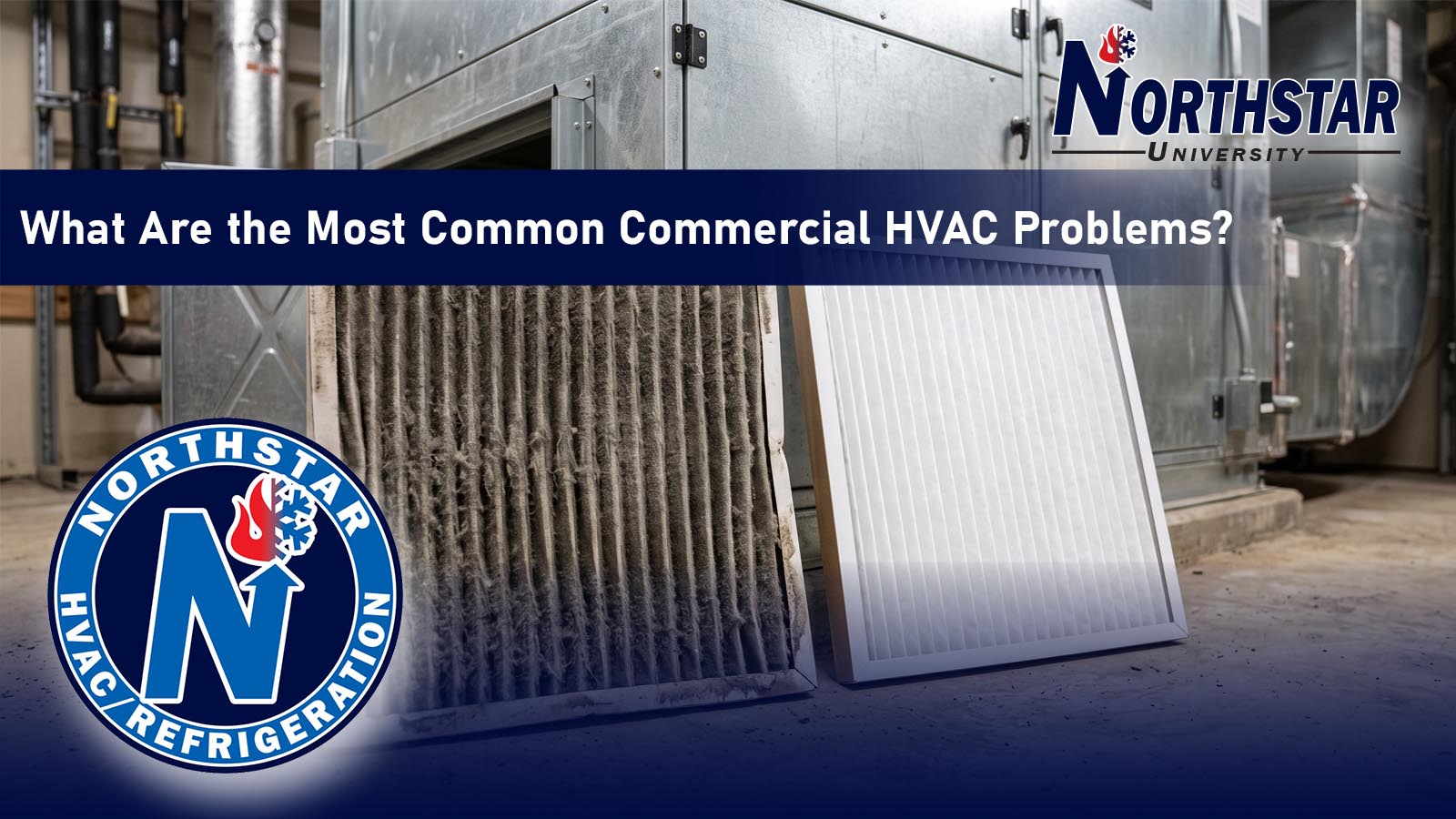
Clogged or dirty components are the number one cause of commercial HVAC inefficiency. When filters get blocked, airflow drops. The system has to work harder to move air, which drives up energy use and puts stress on every other component.
Most commercial systems need filter checks at least once a month, depending on the building type and air quality. Schools, hospitals, and facilities with high foot traffic tend to need more frequent attention.
Dirty Coils Cause More Damage Than You Think
Condenser and evaporator coils collect dust and debris over time. When coils get dirty, heat transfer drops. That means your system uses more energy to reach the same temperature. In some cases, dirty coils lead to compressor failure, which is one of the most costly repairs a facility can face.
Regular condenser coil cleaning is one of the simplest ways to extend equipment life and keep energy bills in check. Do not wait until performance drops to schedule it.
Refrigerant Leaks and Low Charge Issues
A refrigerant leak does not always announce itself. You might notice the system running longer than usual, uneven cooling, or ice forming on the coil. By the time those signs appear, the system has already been running under stress for a while.
Low refrigerant reduces the system's ability to transfer heat. If it goes uncorrected, the compressor can overheat and fail. Refrigerant issues also have compliance implications, since the EPA regulates how refrigerants are handled and disposed of in commercial systems.
What to Do if You Suspect a Leak
Do not add refrigerant without finding the source of the leak first. That is a short-term fix that leads to repeat problems. A qualified technician needs to locate the leak, repair it, and then recharge the system to the correct level.
At Northstar Refrigeration, technicians are trained to handle refrigerant issues across a wide range of commercial and industrial systems, including newer A2L refrigerant types now required under updated EPA rules.
Airflow and Duct Problems
Poor airflow is one of the most common complaints in commercial buildings, and it often gets blamed on the equipment itself. But the real cause is frequently the duct system. Leaks, blockages, and poor duct design all reduce how well conditioned air reaches the spaces that need it.
When airflow is uneven, some areas of a building feel too hot while others feel too cold. That leads to thermostat adjustments, overcooling or overheating, and unnecessary energy waste. Common airflow issues in commercial facilities are often overlooked until tenants or staff start raising concerns.
Rooftop Units and Vent Blockages
Many commercial buildings use rooftop HVAC units. These units face direct exposure to the elements, including rain, debris, and New England winters. Blocked vents, damaged drain pans, and worn belts are all common problems in rooftop systems.
If your rooftop unit is struggling to keep up, it may be showing early signs of a larger issue. Reviewing the signs your rooftop HVAC unit needs replacement can help you decide whether repair or replacement makes more sense.
Thermostat and Controls Failures
Thermostat problems are often confused with larger mechanical failures. A faulty sensor, dead battery, or miscalibrated thermostat can cause the system to short-cycle, run constantly, or fail to respond at all. Before assuming the worst, have the controls checked first.
In larger commercial buildings, building automation systems manage HVAC across multiple zones. When one part of the controls system fails, it can affect the entire building. A trained technician can pinpoint the source quickly rather than replacing equipment that is still functional.
Frequently Asked Questions
How often should a commercial HVAC system be serviced?
Most commercial systems should be serviced at least twice a year, once before the cooling season and once before the heating season. High-use facilities, like hospitals and schools, may need quarterly visits. A preventative maintenance program helps you stay on schedule without tracking it manually.
What causes a commercial HVAC system to short-cycle?
Short-cycling happens when the system turns on and off too frequently without completing a full run cycle. Common causes include an oversized unit, a dirty filter, low refrigerant, or a faulty thermostat. Left unaddressed, short-cycling increases wear and leads to premature equipment failure.
How can I tell if my building has an airflow problem?
Signs of airflow problems include hot or cold spots in the building, rooms that take a long time to reach the set temperature, and unusual pressure differences when doors open or close. Noisy vents or weak air coming from registers are also common indicators.
Is it normal for a commercial HVAC system to run constantly?
A commercial system that runs nonstop without reaching the set temperature is not working correctly. This is often caused by dirty coils, low refrigerant, or a unit that is undersized for the load. Continuous operation drives up energy costs and shortens equipment life significantly.
What is the most common reason commercial HVAC systems fail early?
Lack of maintenance is the leading cause of premature failure in commercial HVAC systems. Skipping scheduled service allows small problems to compound until they cause major damage. Regular inspections, filter changes, and coil cleaning prevent most of the issues that lead to early replacement.
Talk to Northstar Refrigeration About Your System
Most commercial HVAC problems do not appear overnight. They build over time, often quietly, until something breaks down at the worst possible moment. Staying ahead of those problems is the most practical thing a facility manager or building owner can do.
Northstar Refrigeration has been serving commercial and industrial facilities across Massachusetts and New England since 2004. The team offers repair, maintenance, installation, and 24/7 emergency service for facilities that cannot afford to go down. Whether you manage a hospital, a school, a commercial building, or a warehouse, Northstar Refrigeration has the experience to handle it.
If you want to review what commercial HVAC and refrigeration services are available, or if you are ready to schedule service, contact Northstar Refrigeration at 508-888-3692 or visit https://www.northstarhvacr.com/ to get started.
Do you have questions about this topic?
📧 Email sales@northstarhvacr.com to discuss predictive maintenance and monitoring options for your business.