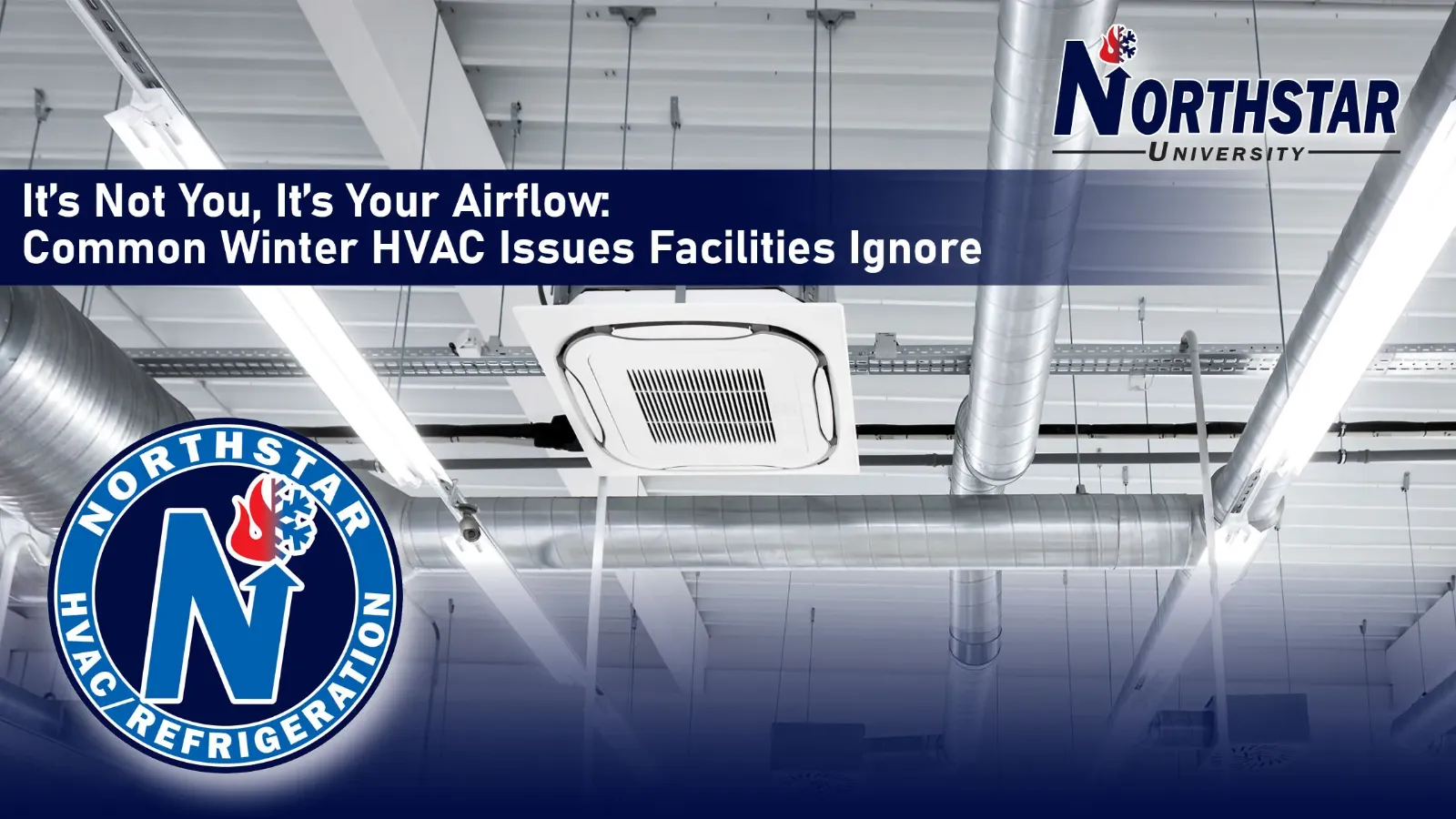
It’s Not You, It’s Your Airflow: Common Winter HVAC Issues Facilities Ignore
Winter has a way of shifting priorities. When the heat is running and occupants are comfortable, it's easy to assume your HVAC system is doing just fine.
But comfort alone doesn't mean performance is optimal.
Behind the scenes, airflow issues often develop during the winter months, quietly reducing efficiency, increasing wear, and setting the stage for bigger problems later in the season.
If your building feels “okay,” but energy bills are rising or certain zones feel inconsistent, the issue might not be your equipment.
It might be your airflow.
Why Winter Airflow Problems Go Unnoticed
During winter, systems operate differently than they do in cooling season:
- Heating demand increases runtime
- Outdoor air dampers may be positioned differently
- Filters load faster due to dry air and debris
- Snow and ice restrict intakes
- Occupancy patterns shift
Because the system is actively producing heat, many airflow problems are masked, until they become expensive.
1. Dirty or Restricted Filters
Cold weather often means systems run longer cycles. That extended runtime pushes more air, and more debris, through filters.
Clogged filters cause:
- Reduced airflow across heat exchangers
- Higher static pressure
- Increased blower motor strain
- Uneven space temperatures
- Rising energy consumption
Even slightly restricted airflow can increase operating costs significantly over the course of a winter.
Mid-season filter checks are critical.
2. Closed or Blocked Supply & Return Vents
In office and commercial environments, occupants sometimes close vents in an attempt to control comfort.
What seems like a small adjustment can:
- Disrupt system balance
- Increase static pressure
- Reduce airflow in other zones
- Force equipment to work harder
In warehouse or industrial spaces, stored materials can block returns or supply paths, quietly choking airflow.
3. Snow-Covered Outdoor Air Intakes
Rooftop units rely on proper intake and exhaust airflow. Snow drifts and ice accumulation can restrict outdoor air intake and economizer function.
Restricted airflow leads to:
- High-limit trips
- Incomplete combustion
- Reduced heating capacity
- Increased cycling
This issue is especially common after Nor'easters and freeze-thaw cycles.
4. Failing Blower Motors or Belts
Extended winter operation accelerates wear on:
- Fan belts
- Bearings
- Motors
Reduced airflow caused by mechanical wear may not trigger alarms immediately, but it decreases heat distribution and efficiency.
If certain zones feel slower to heat, or airflow seems weaker than normal, mechanical components should be inspected.
5. Poorly Balanced Systems
Air balancing issues become more obvious during winter, especially in multi-zone buildings.
Common symptoms:
- Hot upper floors
- Cold perimeter offices
- Draft complaints
- Uneven humidity levels
Often, the equipment is functioning properly, but airflow distribution isn't optimized.
6. Static Pressure Problems
Increased filter loading, closed dampers, or duct obstructions can increase static pressure within the system.
High static pressure:
- Strains blower motors
- Increases energy use
- Reduces system lifespan
- Causes premature component failure
Most facilities don't routinely monitor static pressure mid-season, but they should.
Why Airflow Issues Matter More Than You Think
Airflow isn't just about comfort. It affects:
- Energy efficiency
- Equipment longevity
- Indoor air quality
- Freeze protection
- Occupant satisfaction
- Maintenance costs
Many winter HVAC emergencies start as minor airflow restrictions that were never addressed.
Mid-Winter Airflow Check: What to Do Now
To protect your HVAC system before peak strain:
✔ Inspect and replace filters
✔ Verify outdoor intakes are clear
✔ Check belts, motors, and bearings
✔ Review static pressure readings
✔ Confirm supply and return paths are unobstructed
✔ Evaluate zone balance
Small adjustments now prevent larger failures later.
How Northstar Refrigeration Can Help
Northstar helps facilities identify airflow-related inefficiencies before they escalate into equipment failure.
We provide:
- Mid-season HVAC inspections
- Airflow diagnostics and balancing support
- Rooftop intake and exhaust evaluations
- Preventive maintenance programs
- 24/7 emergency service when issues arise
📞 Call (508) 888-3692
📧 Email sales@northstarhvacr.com to schedule a winter airflow evaluation.
Learn more about our commercial HVAC services, or contact us to schedule a consultation.
Do you have questions about this topic?
📧 Email sales@northstarhvacr.com to discuss predictive maintenance and monitoring options for your business.