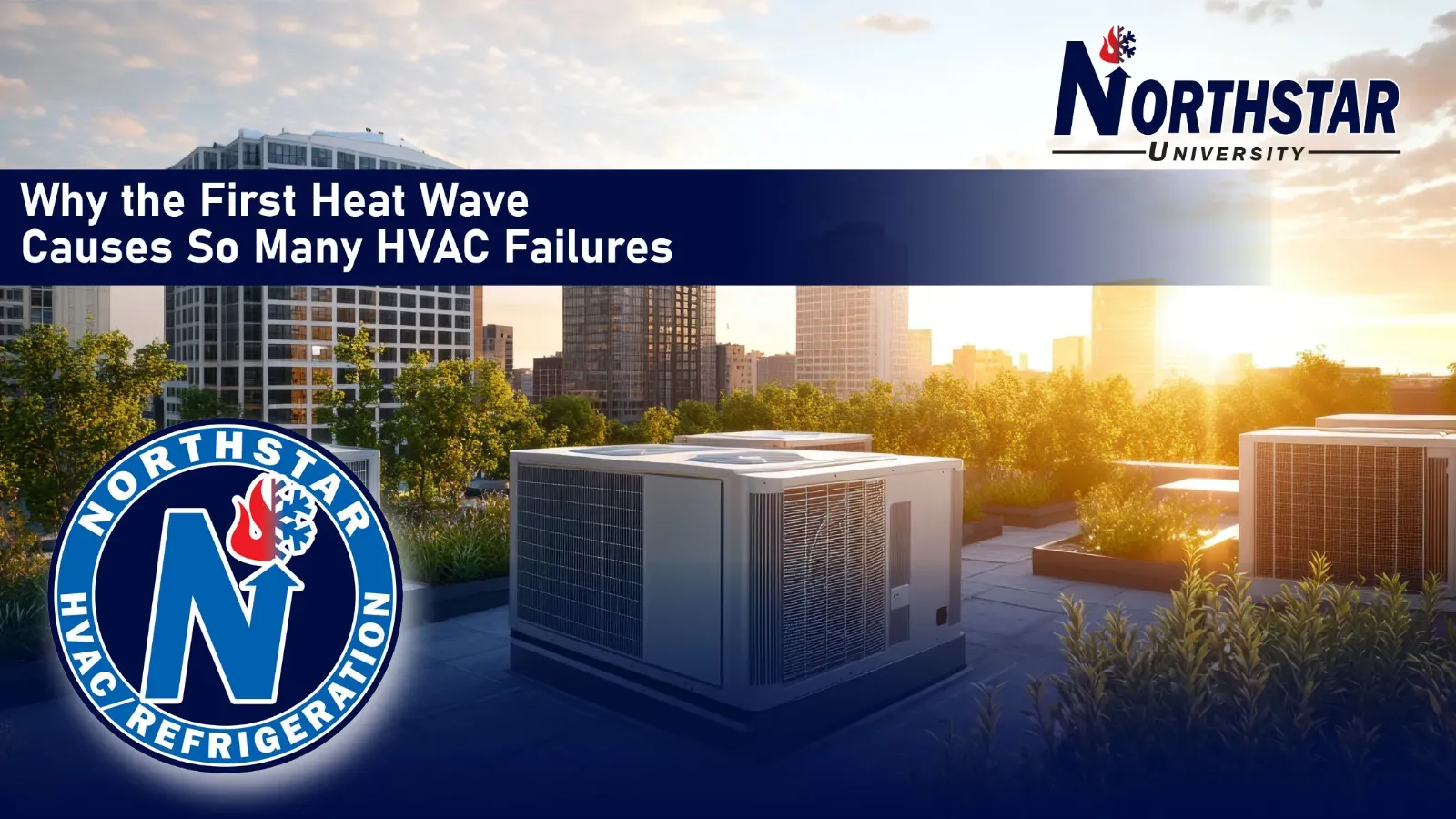
Why the First Heat Wave Causes So Many HVAC Failures
Every year, the pattern repeats itself.
The first major heat wave arrives… and suddenly HVAC systems across commercial buildings begin failing.
Emergency calls spike. Occupants complain about uneven cooling. Equipment that seemed fine in spring suddenly struggles to maintain setpoints.
So why does the first heat wave create so many HVAC problems?
Because the first true stretch of extreme heat acts like a stress test for every weakness that developed during the off-season.
The First Heat Wave Exposes Problems That Were Already There
Most HVAC failures during early summer don’t happen because the heat wave “broke” the system overnight.
They happen because:
- Minor issues went unnoticed during milder weather
- Equipment hasn’t operated at full cooling load in months
- Components are suddenly pushed to peak demand
A system that performs adequately in 72°F weather may struggle significantly at 95°F with high humidity.
1. Extended Runtime Reveals Weak Components
During mild conditions, systems cycle normally and may hide performance issues.
But during a heat wave:
- Compressors run longer
- Fans operate continuously
- Electrical loads increase
- Refrigeration pressures rise
Weak components that survived spring operation often fail once runtime becomes continuous.
Common failures include:
- Capacitors
- Contactors
- Fan motors
- Belts and bearings
- Compressors under stress
2. Dirty Coils Become a Major Problem
Condenser coils that seemed “good enough” in spring become a major efficiency issue during extreme heat.
Dirty coils reduce heat rejection, causing:
- Higher head pressures
- Reduced cooling capacity
- Increased energy consumption
- Compressor overheating
During a heat wave, even small airflow restrictions can create significant performance losses.
3. Low Refrigerant Charge Shows Up Fast
Systems with slightly low refrigerant levels often cool adequately during moderate temperatures.
But under peak demand:
- Cooling capacity drops rapidly
- Evaporator performance declines
- Compressors run excessively
This is one of the most common reasons systems suddenly struggle during the first heat event.
4. Airflow Problems Get Amplified
Restricted airflow becomes far more noticeable when cooling demand spikes.
Common causes include:
- Dirty filters
- Blocked returns
- Damaged belts
- Failing blower motors
- Improper economizer operation
The result:
- Uneven cooling
- Longer runtimes
- Difficulty maintaining space temperature
5. Control & Sensor Issues Surface Under Load
Control systems that seemed stable during spring can behave differently during peak conditions.
Heat waves often expose:
- Sensor calibration drift
- Poor sequencing logic
- Incorrect cooling setpoints
- Simultaneous heating and cooling
These issues may not trigger alarms, but they dramatically impact performance.
6. Rooftop Units Take the Full Impact
Commercial rooftop systems experience extreme environmental conditions during summer.
On many rooftops:
- Ambient temperatures exceed 100°F
- Direct sunlight increases equipment stress
- Heat buildup reduces efficiency
Units already operating with marginal performance can quickly become overwhelmed.
7. Buildings Themselves Contribute to the Load
The HVAC system isn’t the only factor.
During the first heat wave:
- Buildings absorb and retain heat
- Occupancy loads increase
- Sun exposure drives indoor temperature gain
This creates cooling demand that systems may not have experienced since the previous summer.
The Real Issue: Deferred Preparation
Most first heat wave failures trace back to one thing:
Lack of preseason preparation.
Facilities that delay maintenance or system evaluations often discover issues only after demand peaks, when repair costs, downtime, and emergency service demand are highest.
What Facilities Should Do Before Peak Summer
To reduce heat wave failures, facilities should:
✔ Clean condenser and evaporator coils
✔ Verify refrigerant charge
✔ Replace filters
✔ Inspect belts, motors, and electrical components
✔ Review controls and setpoints
✔ Test alarms and BAS functionality
✔ Evaluate airflow and ventilation performance
These small steps significantly improve reliability during extreme weather.
How Northstar Refrigeration Helps Facilities Prepare for Summer Demand
Northstar Refrigeration helps commercial and industrial facilities reduce seasonal risk through:
- Preventive maintenance programs
- Preseason HVAC inspections
- Refrigerant and airflow evaluations
- BAS and control optimization
- Emergency response support
- Spare parts planning for peak season
The best time to prepare for a heat wave is before it happens.
📞 Call (508) 888-3692
📧 Email sales@northstarhvacr.com to schedule your summer readiness inspection.
Do you have questions about this topic?
📧 Email sales@northstarhvacr.com to discuss predictive maintenance and monitoring options for your business.