
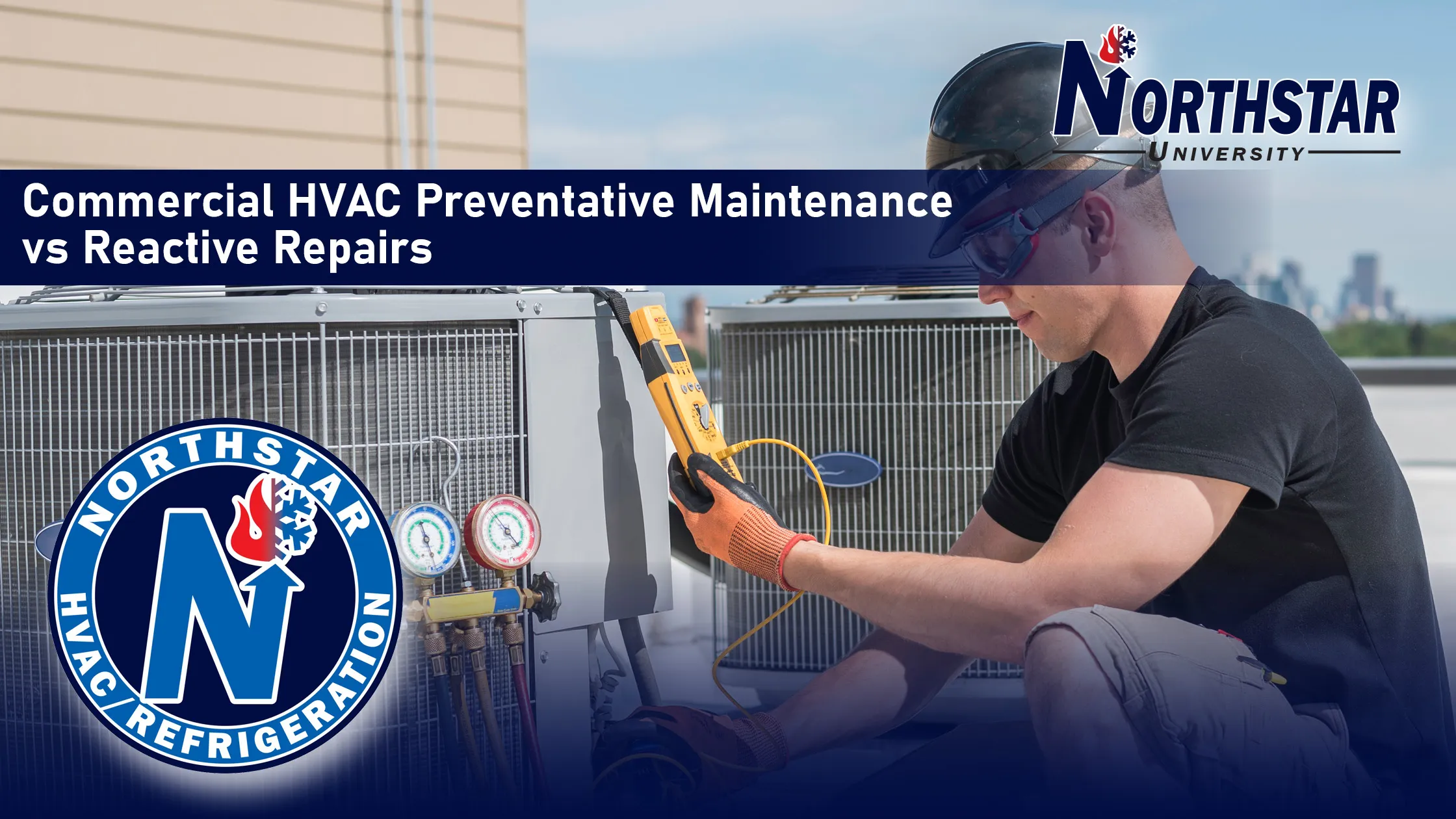
Commercial HVAC Preventative Maintenance vs Reactive Repairs
Commercial HVAC systems support daily business operations. Offices, warehouses, restaurants, and medical facilities rely on steady heating and cooling. When systems fail, the impact can be immediate. Employees lose comfort, customers complain, and operations slow down.
Many businesses take a reactive approach. They call for service only after the system stops working. This approach often leads to higher repair costs and unplanned downtime.
Preventative maintenance offers a better path. Scheduled inspections and routine service help catch problems early. This keeps equipment running longer and reduces the risk of sudden failure.
Understanding the difference between preventative maintenance and reactive repairs helps you protect your building, your budget, and your operations.
Key Takeaways
- Preventative maintenance reduces unexpected HVAC breakdowns
- Routine service can improve system efficiency by up to 20 percent
- Reactive repairs often cost more due to emergency labor and downtime
- Regular maintenance can extend HVAC equipment life by several years
- A maintenance plan helps protect indoor air quality and business operations
What Is Commercial HVAC Preventative Maintenance?
Commercial HVAC preventative maintenance is a scheduled service designed to keep commercial HVAC equipment operating properly. Instead of waiting for a failure, technicians inspect and service the system regularly.
These visits allow technicians to identify wear, loose connections, airflow issues, and other problems before they lead to breakdowns.
Preventative maintenance focuses on stability and performance. The goal is to keep the system running reliably while reducing operating costs.
For many commercial buildings, maintenance occurs two to four times per year. The schedule often aligns with seasonal changes before heavy cooling or heating demand.
What Tasks Are Included in Preventative Maintenance?
Preventative maintenance includes several routine service tasks. Each task supports system efficiency and reliability.
Common maintenance services include:
- Filter replacement to maintain airflow
- Coil cleaning to remove dirt and debris
- Refrigerant level checks
- Electrical connection inspection
- Thermostat calibration
- Fan and blower inspection
- Drain line cleaning
- Belt and motor checks
These steps help prevent overheating, airflow restrictions, and energy waste.
For example, clogged air filters can reduce airflow by up to 15 percent. Dirty condenser coils can increase energy use by 30 percent. Routine maintenance addresses these issues before they affect performance.
How Often Commercial HVAC Systems Should Be Serviced
Most commercial HVAC systems require service two to four times per year. The exact schedule depends on system size, building type, and operating hours.
Facilities with high occupancy often require more frequent inspections. Restaurants, manufacturing plants, and healthcare buildings place heavy demand on HVAC equipment.
Seasonal service visits are common.
Spring maintenance prepares the cooling system before summer.
Fall maintenance prepares the heating system before winter.
Routine inspections between seasons help maintain stable performance throughout the year.
What Reactive HVAC Repairs Mean
Reactive maintenance occurs after a system fails. A technician is called only when the HVAC system stops working or shows major problems.
Common situations include:
- Complete system shutdown
- Refrigerant leaks
- Compressor failure
- Electrical faults
- Frozen coils
- Airflow blockages
Reactive repairs focus on restoring operation quickly. Emergency service often requires rapid diagnostics and immediate replacement of parts.
While this approach solves the immediate problem, it does not address the underlying wear that may lead to future failures.
Why Many Businesses Use Reactive Repairs
Some businesses rely on reactive repairs to avoid scheduled maintenance costs. Others may not realize the long-term impact of skipping routine service.
In some cases, older buildings lack maintenance plans or service contracts.
At first, reactive repairs may appear less expensive. However, the long-term costs often exceed preventative maintenance.
Emergency service rates can be higher. Equipment failures may cause production delays or tenant complaints.
Without regular inspections, small issues grow into larger and more expensive problems.
Common Problems That Trigger Emergency HVAC Repairs
Several issues frequently cause unexpected HVAC breakdowns.
- Compressor failure is one of the most expensive problems. The compressor is the core component of the cooling system. When it fails, replacement costs can reach several thousand dollars.
- Refrigerant leaks also cause performance problems. Low refrigerant levels reduce cooling capacity, forcing the system to work harder.
- Electrical failures are another common issue. Loose wiring or damaged components can shut down the system.
- Airflow restrictions often come from dirty filters or blocked ducts. Poor airflow can lead to overheating and frozen evaporator coils.
Most of these issues begin as minor problems. Preventative maintenance helps identify them early.
Cost Comparison Over Time
Preventative maintenance costs are predictable. Businesses schedule routine service and pay a fixed maintenance fee.
Reactive repairs are unpredictable. Emergency service, parts replacement, and labor can quickly increase expenses.
Consider a typical example.
A routine maintenance visit may cost a few hundred dollars. Emergency repairs, including compressor replacement, can exceed several thousand dollars.
Downtime also adds indirect costs. When HVAC systems fail, building operations may slow or stop.
Retail stores lose customer traffic. Offices lose employee productivity. Restaurants may temporarily close due to comfort concerns.
Preventative maintenance helps reduce these risks.
Impact on Equipment Lifespan
Commercial HVAC systems represent a major investment. Rooftop units, chillers, and large air handling systems can cost tens of thousands of dollars.
Routine maintenance helps protect that investment.
Without regular service, components wear faster. Dust buildup reduces efficiency and increases system strain.
Well-maintained systems often last 15 to 20 years. Poorly maintained systems may fail several years earlier.
Extending equipment life helps businesses avoid early replacement costs.
Energy Efficiency and Utility Costs
Energy use is a major operating cost for commercial buildings. HVAC systems often account for 40 percent of a building's total energy consumption.
When equipment becomes dirty or misaligned, efficiency declines.
Dirty coils reduce heat transfer. Clogged filters restrict airflow. Low refrigerant levels increase compressor workload.
Studies show that proper HVAC maintenance can improve energy efficiency by 15 to 20 percent.
Lower energy consumption reduces monthly utility bills and improves system performance.
Business Downtime and Comfort Issues
Temperature control affects both employees and customers.
When HVAC systems fail, indoor temperatures quickly become uncomfortable. Employees lose focus and productivity.
Customers may leave businesses that feel too hot or too cold.
In healthcare facilities, temperature control is critical for patient safety and equipment performance.
Preventative maintenance helps avoid these disruptions by keeping systems stable.
Lower Repair Costs
Preventative maintenance focuses on early detection.
During routine inspections, technicians identify loose connections, worn belts, or airflow issues. These problems can often be corrected quickly.
Small repairs cost far less than emergency system replacements.
Regular maintenance helps reduce the frequency of major repair calls.
Improved Energy Efficiency
Clean components and balanced airflow allow HVAC systems to run efficiently.
When systems operate efficiently, compressors and fans work less. This reduces wear and lowers electricity use.
Over time, improved efficiency can significantly reduce operating costs.
Better Indoor Air Quality
Indoor air quality affects employee health and comfort.
Dirty filters and coils allow dust, allergens, and bacteria to circulate through the building.
Preventative maintenance includes cleaning and filter replacement. This helps improve indoor air conditions and supports healthier work environments.
Compliance and System Reliability
Many equipment warranties require regular maintenance.
Without documented service records, manufacturers may reject warranty claims.
Maintenance documentation also helps building managers track system performance and repair history.
Reliable records make it easier to plan future upgrades or replacements.
System Inspection and Performance Testing
A strong maintenance plan begins with a full system inspection.
Technicians evaluate airflow, refrigerant levels, electrical connections, and thermostat operation.
Performance testing confirms that the system meets manufacturer specifications.
Routine Cleaning and Component Care
Cleaning is a critical part of maintenance.
Technicians remove debris from condenser and evaporator coils and from fan components. Drain lines are cleared to prevent water buildup.
Filters are replaced to maintain proper airflow.
These steps help protect both efficiency and equipment lifespan.
Seasonal System Preparation
Seasonal preparation helps HVAC systems handle heavy demand.
Cooling systems are inspected before summer temperatures rise. Heating systems are tested before winter conditions arrive.
Preparing equipment ahead of peak seasons reduces the risk of failure during peak demand.
Maintenance Documentation and Reporting
Professional maintenance programs include service reports.
These reports document inspection results, repairs completed, and recommended improvements.
Detailed records help facility managers monitor equipment condition and plan future service needs.
Signs Your Commercial HVAC System Needs Preventative Maintenance
Some warning signs indicate that maintenance is overdue.
- Rising energy bills may signal declining efficiency.
- Uneven temperatures across the building suggest airflow problems.
- Strange noises may indicate worn components.
- Frequent system shutdowns suggest deeper mechanical issues.
Addressing these signs early helps prevent major equipment failure.
Frequently Asked Questions
What is commercial HVAC preventative maintenance?
Commercial HVAC preventative maintenance is a scheduled service that keeps heating and cooling equipment operating efficiently. It includes inspections, cleaning, testing, and small repairs.
How often should commercial HVAC systems be serviced?
Most commercial HVAC systems should be serviced two to four times per year. Buildings with heavy usage may require additional inspections.
What does a commercial HVAC maintenance visit include?
A maintenance visit usually includes filter replacement, coil cleaning, refrigerant checks, electrical inspection, thermostat testing, and airflow evaluation.
What happens if HVAC systems are not maintained?
Without maintenance, HVAC systems lose efficiency and develop mechanical problems. This often leads to higher energy costs and unexpected equipment failures.
Is preventative maintenance cheaper than reactive repairs?
Yes. Preventative maintenance helps detect small problems early. Early repairs cost far less than emergency service and major equipment replacement.
How long do commercial HVAC systems last with regular maintenance?
With proper maintenance, many commercial HVAC systems last 15 to 20 years. Systems that receive little maintenance often fail earlier.
Can preventative maintenance reduce HVAC energy costs?
Yes. Routine cleaning and system adjustments improve efficiency. Studies show maintenance can improve HVAC efficiency by up to 20 percent.
What types of businesses need commercial HVAC maintenance?
Any facility that relies on heating or cooling systems benefits from maintenance. Offices, warehouses, retail stores, restaurants, and healthcare facilities all depend on reliable HVAC systems.
Final Thoughts
Commercial HVAC systems support comfort, productivity, and building operations. Waiting for equipment to fail often leads to higher repair costs, emergency service calls, and unexpected downtime.
Preventative maintenance helps reduce these risks. Scheduled inspections keep systems efficient, reliable, and prepared for seasonal demand.
Businesses that invest in routine maintenance protect their equipment and maintain stable indoor environments.
If your facility depends on reliable heating, cooling, or refrigeration, professional maintenance is essential.
Schedule a commercial HVAC preventative maintenance assessment with Northstar Refrigeration today. Their team helps businesses keep HVAC systems running efficiently and ready for 24/7 operation.
Learn more about our commercial HVAC services, or contact us to schedule a consultation.
Do you have questions about this topic?
📧 Email sales@northstarhvacr.com to discuss predictive maintenance and monitoring options for your business.