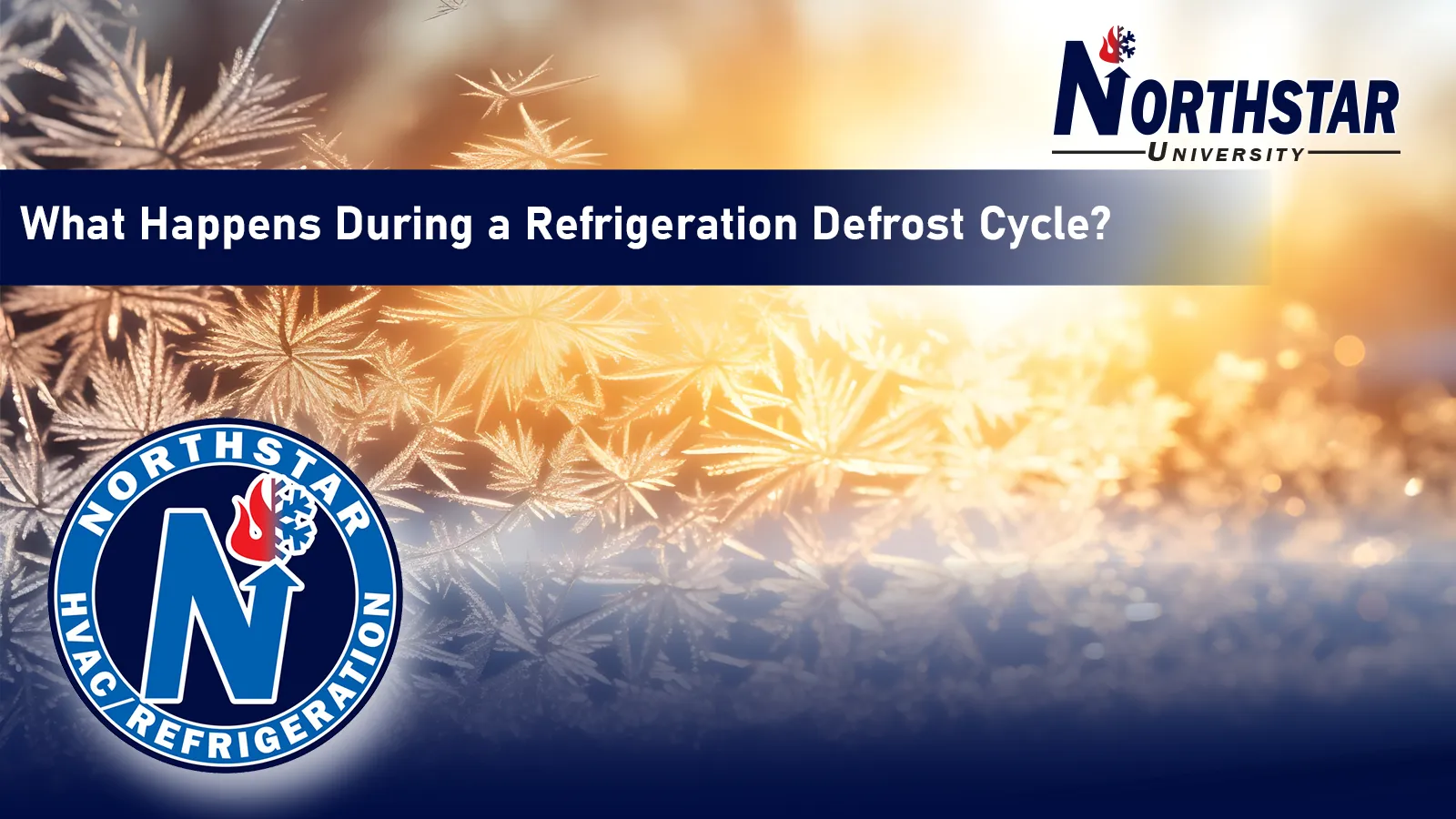
What Happens During a Refrigeration Defrost Cycle?
Ice and refrigeration might seem like they should go hand in hand—but ice buildup on refrigeration equipment can be a sign that something isn't working as intended.
In many refrigeration systems, some frost accumulation is completely normal.
As the system removes heat from a refrigerated space, moisture in the air can freeze on the cold evaporator coil. Over time, that frost can begin restricting airflow and interfering with heat transfer.
That's where the defrost cycle comes in.
Defrost is a normal part of refrigeration system operation designed to periodically remove accumulated frost and allow the evaporator to continue operating efficiently.
But there's an important distinction between normal frost that is successfully managed by the defrost cycle and excessive or recurring ice buildup that may indicate a problem.
Here's what happens and why it matters.
Why Does Frost Form in the First Place?
A refrigeration evaporator operates at a low enough temperature that moisture in the surrounding air can condense and freeze on the coil.
Every time warmer, moisture-containing air enters the refrigerated space, more moisture becomes available to freeze.
The amount of frost that develops can be influenced by factors such as:
- Door openings
- Humidity levels
- Product loading
- Air infiltration
- Operating temperatures
- How frequently the space is accessed
A light accumulation of frost doesn't necessarily indicate a problem. It's an expected operating condition that the refrigeration system is designed to manage.
The problem begins when frost accumulates faster than it can be effectively removed.
Why Does Frost Need to Be Removed?
An evaporator coil depends on both airflow and heat transfer.
As frost builds on the coil, it creates a barrier between the air and the coil surface.
If enough frost accumulates, it can:
- Restrict airflow
- Reduce heat transfer
- Increase equipment runtime
- Make temperature control more difficult
- Increase energy consumption
- Eventually contribute to equipment performance problems
Think of it like putting an insulating layer around the coil.
The refrigeration system may continue operating, but it has to work harder to accomplish the same job.
What Happens During a Defrost Cycle?
During normal refrigeration operation, the evaporator absorbs heat from the refrigerated space.
Periodically, the system temporarily changes operating conditions so the frost on the evaporator can melt.
A typical defrost cycle generally involves several stages:
1. Refrigeration to the evaporator is interrupted.
The system temporarily stops normal cooling at that evaporator.
2. Heat is introduced or allowed to reach the coil.
Depending on the type of defrost system, this may happen naturally or through an active heat source.
3. Frost melts from the evaporator.
The resulting water drains away through the condensate or defrost drainage system.
4. The system transitions back to refrigeration.
Once defrost is complete, normal cooling resumes and the evaporator returns to maintaining the refrigerated space.
The exact sequence varies depending on the refrigeration system and defrost method.
Not Every System Defrosts the Same Way
There are several methods used to remove frost from refrigeration evaporators.
Off-Cycle Defrost
One of the simplest approaches is allowing the evaporator to warm naturally when refrigeration stops.
This can work in applications where the surrounding air is warm enough to melt accumulated frost.
Because it relies on ambient heat rather than an additional heat source, it isn't appropriate for every refrigeration application.
Electric Defrost
Electric heaters installed around or within the evaporator provide heat during the defrost cycle.
The heaters warm the coil enough to melt accumulated frost before the system returns to normal refrigeration.
Electric defrost is commonly used where natural off-cycle defrost isn't sufficient.
Hot Gas Defrost
Hot gas defrost uses heat from the refrigeration system itself to warm the evaporator coil and remove frost.
This method can be particularly effective in larger commercial and industrial refrigeration applications, but it requires proper system design and controls to operate correctly.
Regardless of the method, the objective is the same:
Remove frost efficiently and return the evaporator to normal operation.
What Happens When Defrost Isn't Working Correctly?
Defrost problems aren't always as simple as “the heater stopped working.”
A defrost system depends on several components and operating conditions working together.
Problems may involve:
- Defrost controls
- Temperature sensors
- Heaters
- Valves
- Drainage
- Defrost duration
- Defrost frequency
- Air infiltration
- Evaporator fans
If the defrost cycle ends too early, frost may remain on the coil.
If defrost occurs too frequently or lasts too long, unnecessary heat can be introduced into the refrigerated space.
Effective defrost is therefore about more than simply melting ice. Timing, controls, drainage, and system operation all matter.
Drainage Is Part of the Process
Melting the frost is only half the job.
The resulting water has to go somewhere.
If a drain becomes blocked or water doesn't properly leave the evaporator area, it may refreeze.
That can create ice buildup even when the actual defrost cycle is functioning.
This is one reason visible ice doesn't automatically tell you what's wrong. The underlying cause may require looking at the entire defrost process.
What Might Facility Teams Notice?
Facility personnel don't need to diagnose the defrost system themselves, but they can often recognize when normal operation has changed.
Potential warning signs include:
- Excessive ice on an evaporator
- Ice that repeatedly returns shortly after being cleared
- Reduced airflow
- Difficulty maintaining space temperature
- Longer refrigeration runtimes
- Unusual temperature fluctuations around defrost
- Water or ice where it normally isn't present
- Recurring system alarms
One observation alone may not identify the cause.
But changes and recurring patterns are worth documenting and investigating.
Not All Ice Means the Same Thing
This is perhaps the most important takeaway.
Seeing frost on refrigeration equipment doesn't automatically mean something is wrong.
Some frost accumulation is expected, and the refrigeration system's defrost strategy exists specifically to manage it.
What's more concerning is when:
- Frost doesn't clear.
- Ice becomes excessive.
- Buildup repeatedly returns.
- Airflow becomes restricted.
- Temperature performance begins changing.
At that point, the question isn't simply how to remove the ice.
It's why the system isn't managing it properly.
In Summary
Defrost is a normal and important part of refrigeration operation.
Moisture freezes on cold evaporator surfaces, frost accumulates, and the system periodically removes that buildup so airflow and heat transfer can continue effectively.
When everything is operating correctly, the process may happen largely unnoticed.
When it isn't, excessive ice can become one of the most visible clues that something deserves attention.
The goal isn't simply to get rid of the ice. It's to understand why it's there and whether the system is managing it the way it should.
At Northstar Refrigeration, our team helps commercial and industrial facilities troubleshoot refrigeration performance, including evaporator icing, defrost issues, controls, and other conditions that can affect system reliability.
Do you have questions about this topic?
📧 Email sales@northstarhvacr.com to discuss predictive maintenance and monitoring options for your business.