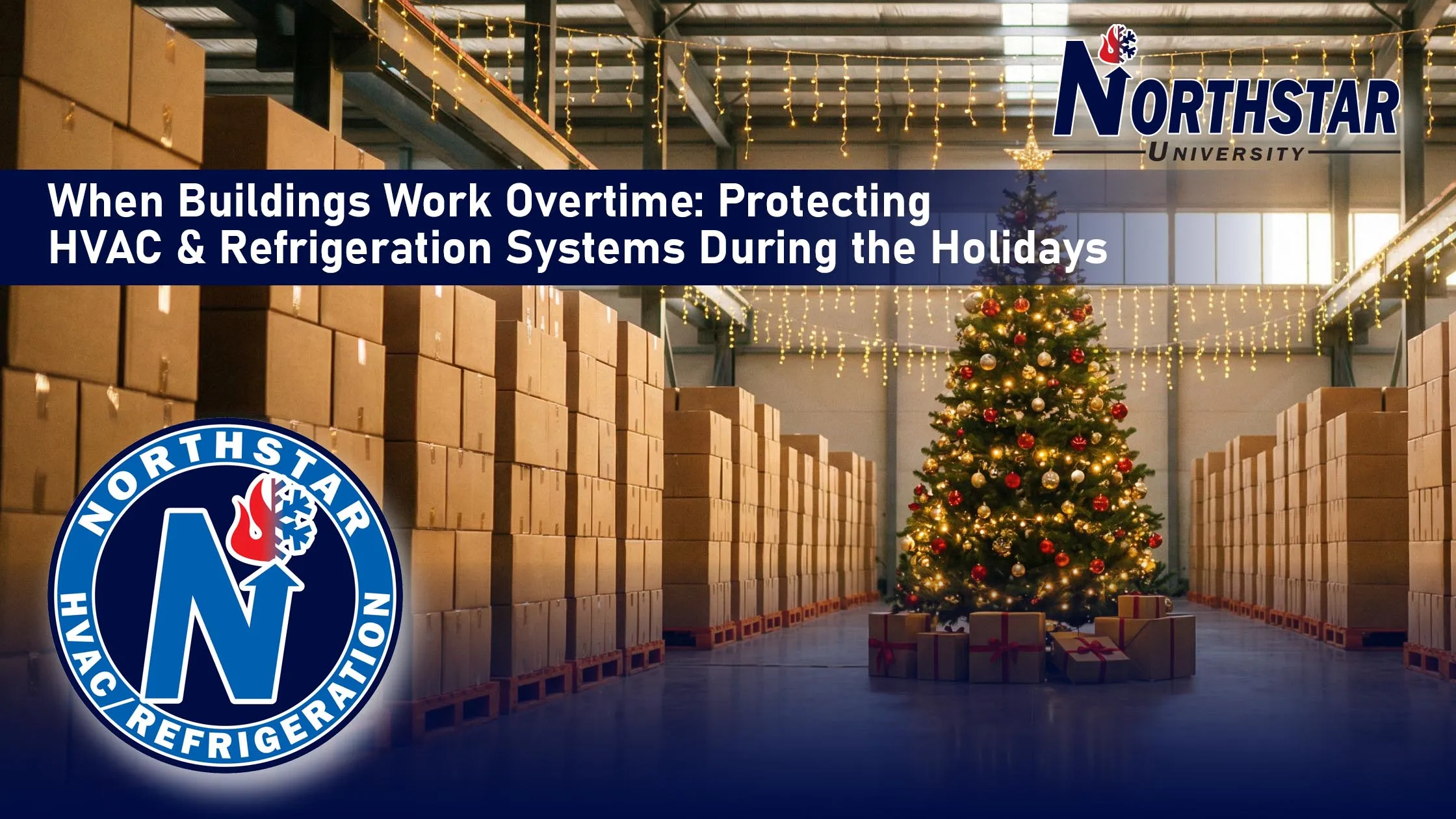
When Buildings Work Overtime: Protecting HVAC & Refrigeration Systems During the Holidays
The holiday season brings extended hours, increased foot traffic, special events, and fluctuating occupancy schedules. While buildings may be "open longer," HVAC and refrigeration systems often shoulder a heavier workload, frequently with limited staff on-site to monitor performance.
For commercial and industrial facilities, this combination can increase the risk of system strain, unexpected failures, and costly downtime. With the right planning, however, you can protect critical HVAC/R systems and keep operations running smoothly through the holidays.
Why the Holidays Are Hard on HVAC/R Systems
Holiday operations often introduce conditions that differ significantly from normal building schedules:
- Extended operating hours and overnight use
- Increased heating demand due to cold weather
- Higher internal heat loads from occupants and equipment
- Reduced on-site maintenance staffing
- Limited access to parts and vendors
Without preparation, these factors can push equipment beyond its normal operating envelope.
Key Risks to Watch For
1. Extended Runtime and Accelerated Wear
When systems run longer than usual, components like motors,belts, bearings, and compressors experience increased wear.
What to do:
✔ Inspect high-wear components before peak holidayperiods
✔ Address minor issues proactively to avoid majorfailures
2. Temperature Setback Misalignment
Holiday schedules often lead to temporary thermostat or BASadjustments. If not properly coordinated, these changes can cause:
- Excessive cycling
- Freeze risks during unoccupied periods
- Comfort complaints when buildings reopen
Best practice:
Use scheduled setbacks that maintain safe temperature thresholds and align with actual occupancy patterns.
3. Refrigeration Load Variability
Retail, food service, cold storage, and industrial facilities may see increased refrigeration loads during holiday operations.
Risks include:
- Inadequate defrost cycles
- Compressor staging issues
- Reduced product temperature stability
Mitigation:
Verify refrigeration controls, alarms, and monitoring systems before demand increases.
4. Limited Visibility After Hours
With fewer staff on-site, system alarms and alerts may go unnoticed.
Protective steps:
✔ Test alarm notifications and remote monitoring
✔ Confirm escalation contacts are accurate
✔ Review emergency response procedures
5. Parts Availability and Holiday Delays
Shipping delays and limited vendor availability can significantly extend downtime if a component fails.
Recommendation:
Maintain a strategic spare parts inventory for critical equipment, especially for items with long lead times.
Holiday Protection Checklist for Facilities
Before the holiday season peaks, consider:
- Reviewing HVAC and refrigeration service history
- Confirming remote alarm functionality
- Inspecting rooftop units and mechanical rooms
- Checking glycol levels and freeze protection
- Ensuring access paths for emergency service
- Verifying 24/7 emergency service coverage
These simple steps can prevent costly disruptions.
How Northstar Refrigeration Helps Keep You Covered
Northstar supports our clients throughout the holiday season with:
- Preventive maintenance tailored to extended operations
- Remote monitoring validation
- Proactive spare parts recommendations
- 24/7 emergency HVAC and refrigeration service
- Rapid-response technicians trained for critical systems
Whether your facility is operating longer hours or running at full capacity, our team is ready to support you, even when others are out of the office.
📞 Need holiday coverage or emergency support? Call (508) 888-3692.
Learn more about our commercial HVAC services, or contact us to schedule a consultation.
Do you have questions about this topic?
📧 Email sales@northstarhvacr.com to discuss predictive maintenance and monitoring options for your business.