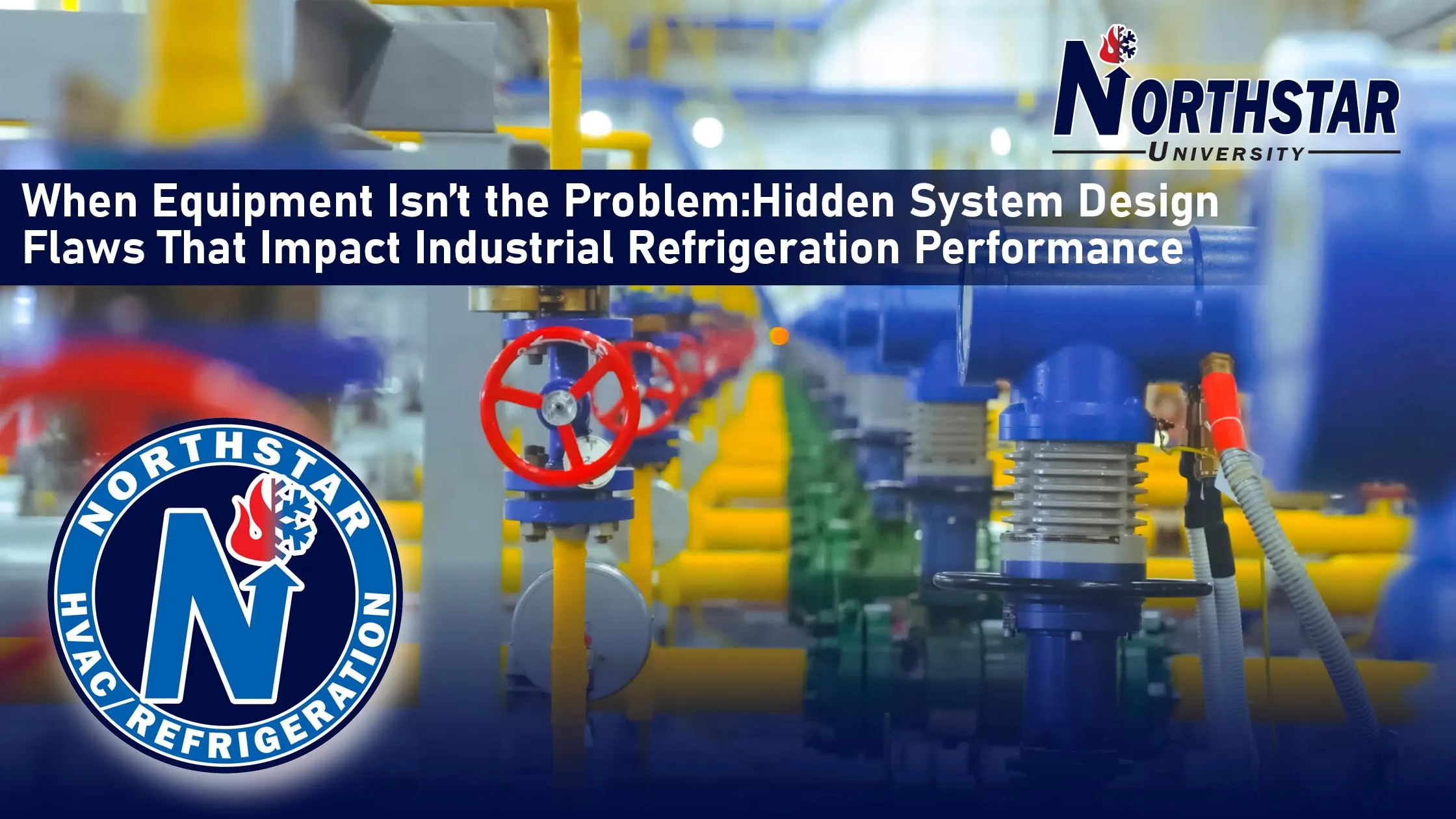
When Equipment Isn’t the Problem: Hidden System Design Flaws That Impact Industrial Refrigeration Performance
In industrial refrigeration, performance issues are often blamed on equipment. Compressors get replaced. Controls get upgraded. Valves are swapped out.
But sometimes, the real issue isn't a failing component: it's a design flaw embedded in the system from day one.
When refrigeration systems underperform despite functioning equipment, it's time to step back and examine the system as a whole. Design deficiencies can quietly undermine efficiency, reliability, and long-term operating costs for years before anyone identifies the root cause.
Here's what facility managers and operators should watch for.
1. Improper Piping Design and Oil Management
Even the best compressors struggle if oil return isn't properly engineered.
Common design-related issues include:
- Incorrect pipe sizing
- Inadequate slope for oil return
- Poorly located traps
- Excessive vertical risers
- Liquid migration problems
Symptoms often appear as:
- Repeated compressor failures
- High oil carryover
- Low oil pressure alarms
- Excessive maintenance frequency
When oil management isn't optimized, component wear accelerates, even if the compressor itself is functioning properly.
2. Undersized or Oversized Equipment Selection
System sizing errors can cause long-term operational inefficiencies.
Undersized systems:
- Run continuously
- Struggle during peak loads
- Experience accelerated wear
Oversized systems:
- Short-cycle frequently
- Operate inefficiently at part load
- Cause temperature instability
These issues often surface years after installation, especially when facility loads evolve.
3. Poor Evaporator and Airflow Design
In cold storage and process cooling environments, airflow distribution is critical.
Design flaws can include:
- Inadequate fan placement
- Uneven coil distribution
- Improper superheat settings
- Poor duct layout
The result?
- Hot and cold zones
- Excessive defrost cycles
- Product temperature inconsistencies
- Increased energy consumption
No component failure, just inefficient airflow design.
4. Inadequate Head Pressure Control Strategy
Cold climate systems (especially in New England) require carefully designed head pressure control for winter operation.
Common design shortcomings:
- Improper condenser fan staging
- Poor ambient control integration
- Lack of receiver sizing for cold weather
- Insufficient bypass strategies
These flaws often present as:
- Flooded condensers
- Compressor short cycling
- Pressure instability
- Increased electrical demand
Again, not equipment failure, but control design.
5. Insufficient Redundancy for Critical Applications
In industrial refrigeration, downtime can be catastrophic. Yet some systems are designed with minimal redundancy.
Potential design risks:
- No backup compressor
- Single-point control failures
- Inadequate emergency power integration
- No bypass capability for service
Facilities only realize these vulnerabilities during their first major failure.
6. Inflexible Systems That Don't Adapt to Changing Loads
Over time, facilities evolve:
- Production increases
- Storage capacity expands
- Process temperatures change
- Regulatory requirements shift
Systems designed without future adaptability often struggle to maintain performance under new conditions.
7. Design That Prioritized Capital Cost Over Lifecycle Performance
Sometimes the issue isn't technical complexity: it's economics.
When systems are value-engineered too aggressively:
- Heat exchangers may be undersized
- Control logic may be simplified
- Efficiency strategies may be omitted
- Monitoring systems may be excluded
These decisions reduce upfront cost but increase lifetime operating expense.
How to Identify Design-Related Performance Issues
If your facility experiences:
- Recurring compressor replacements
- Persistent high energy usage
- Temperature instability
- Frequent nuisance alarms
- Inconsistent system pressures
- Chronic maintenance patterns
It may be time for a system-level evaluation, not another component swap.
How Northstar Refrigeration Approaches Design Evaluation
Northstar looks beyond equipment failures to evaluate:
- Piping configuration and oil management
- Control sequencing and setpoints
- Airflow and heat transfer performance
- Refrigerant charge distribution
- Seasonal performance behavior
- System adaptability and redundancy
Our goal isn't just to fix what's broken: it's to correct underlying system design limitations that impact long-term performance.
📞 Call (508) 888-3692
📧 Email sales@northstarhvacr.com to schedule a refrigeration system evaluation or performance review.
Learn more about our industrial refrigeration services, or contact us to schedule a consultation.
Do you have questions about this topic?
📧 Email sales@northstarhvacr.com to discuss predictive maintenance and monitoring options for your business.